. BEHIND THE CANDELABRA, de Steven Soderbergh

«A bizarre anti-Pinocchio parable in which toxic love transforms a handsome young man into a deeply unhappy latex doll.»
Peter Bradshaw, The Guardian.
«Soderbergh clearly delights in the chance to recreate Liberace’s extravagant costumes and palatial living quarters, while challenging auds’ comfort zones in the film’s depiction of a Douglas-Damon mouth-lock or, in one virtuoso single-shot scene, a trip into the blacklight-illuminated backroom of a Vegas sex arcade.»
Peter Debruge, Variety.
«BEHIND THE CANDELABRA is fabulous - so much so that, were it not for the fact that it reveals everything about his private life that he worked so hard to conceal, Liberace himself might well have loved it.»
Todd McCarthy, The Hollywood Reporter.
. BORGMAN, de Alex Van Warmerdam
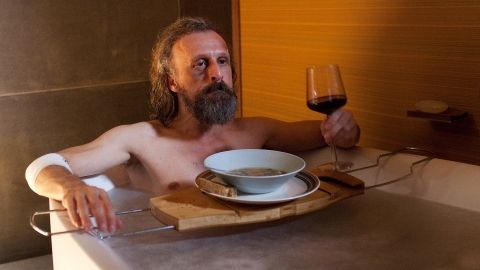
«This is the kind of film that finds droll pleasure in the sight of dead heads setting in buckets of cement.»
Guy Lodge, Variety.
«A quirky study of the unrelenting grip of evil, the film is beautifully made, though stronger in its intriguing setup than its muddy resolution.»
David Rooney, The Hollywood Reporter.
«In an era where there are very few truly surprising films, BORGMAN is one of the rare movies that manages to find something entirely new to say, with original, oddly drawn characters.»
Sasha Stone, TheWrap.
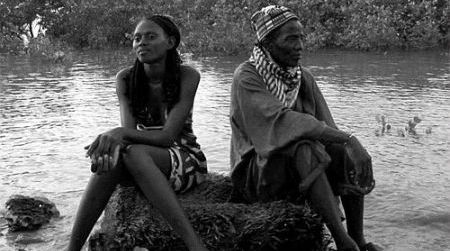
. GRIGRIS, de Mahamat-Saleh Haroun
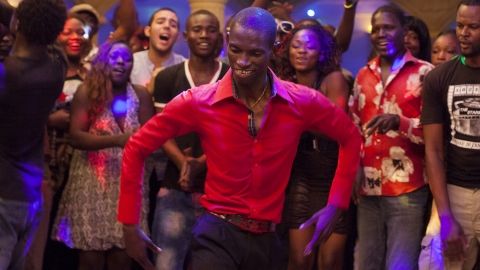
«It is a typically calm, lucid drama, presented in the director's unforced, cinematic vernacular and attractively and sympathetically acted.»
Peter Bradshaw, The Guardian.
«The film is easier to admire than it is to invest in emotionally, though its pulse quickens with a dramatic, and boldly untelegraphed, feminist twist in the rural-set final reel, which is all the more surprising coming from a director whose previous films have been overwhelmingly male-dominated.»
Guy Lodge, Variety.
«The sleepy-paced, elementally simple plot initially requires a degree of patience, but the story ends up gently absorbing.»
Stephen Dalton, The Hollywood Reporter.
. HELI, de Amat Escalante
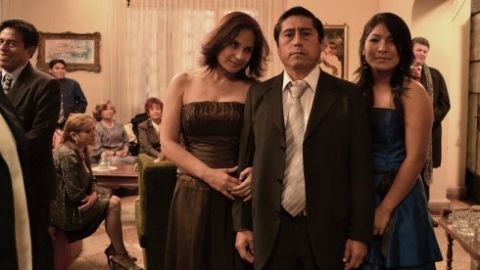
«Escalante is working with very strong dramatic material here, but he never quite shapes it into an engrossing narrative. The abrupt ending is clearly a stylistic statement, but it feels like an evasion.»
Stephen Dalton, The Hollywood Reporter.
«Moments of humor and surrealism [...] at least partially give the audience a break, but by and large, HELI is a despairing, bleak watch. It's a slow, but unrelenting look at one young man's punishing loss of innocence amongst a society that has already decayed beyond understanding.»
Kevin Jagernauth, IndieWire.
«The feeling of parody encroaches and the purported seriousness of the story dissipates. The process of watching the film becomes a game of waiting to see if certain seemingly banal situations descend into horrific violence.»
David Jenkins, Little White Lies.
. INSIDE LLEWYN DAVIS, de Joel e Ethan Coen
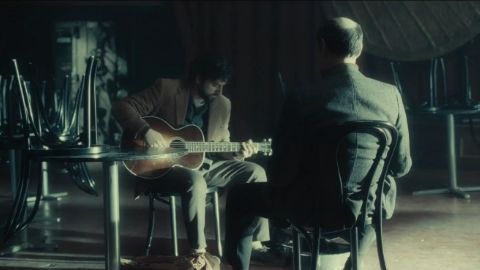
«Brilliantly written, terrifically acted, superbly designed and shot; it's a sweet, sad, funny picture about the lost world of folk music which effortlessly immerses us in the period.»
Peter Bradshaw, The Guardian.
«But the work's core and most brilliant filmmaking, as stunning and singular as anything in the Coens' canon, is embodied in what initially feels like a tangent that, among other things, can be viewed as a deadpan satire on the whole "on the road" ethos of the period.»
Todd McCarthy, The Hollywood Reporter.
«The nomadic Llewyn's fleeting misadventures, which find him drifting from one couch to the next while struggling to justify his career, lead to a delicate, restrained portrait that results in a different kind of movie than anything else the siblings have produced.»
Eric Kohn, IndieWire.
. JEUNE & JOLIE, de François Ozon
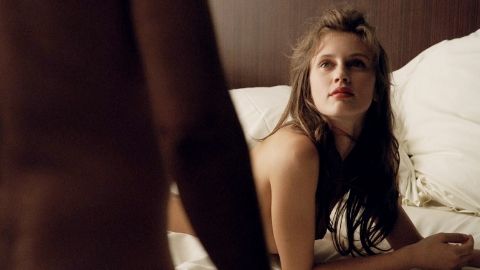
«JEUNE & JOLIE plays a little like BELLE DE JOUR, but quite without Buñuel's beady-eyed subversion; Ozon is more concerned with keeping the apple-cart tensely teetering, rather than crashing over.»
Peter Bradshaw, The Guardian.
«Holding the cards back from the audience can be a rewarding experience, but here it leaves much of the filmmaker's own purpose not just open to interpretation, but to question.»
Kevin Jagernauth, IndieWire.
«Tellingly, Ozon's beautifully-shot portrait of emptiness ends up itself feeling slightly on the vacuous side.»
John Bleasdale, CineVue.
. JIMMY P. (PSYCHOTHERAPY OF A PLAINS INDIAN), de Arnaud Desplechin
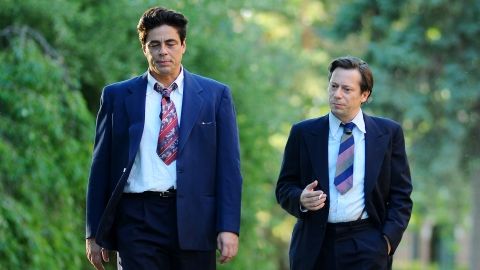
«Few films have focused so intently on the minutiae of psychoanalysis as Desplechin does here — an uncompromising strategy that will undoubtedly distance some viewers while drawing others further in.»
Scott Foundas, Variety.
«Strong turns by Del Toro and Amalric (who thankfully ditches a sea of quirks early on and settles into the part) at least keep things engaging, even if the narrative remains stuck in neutral for large chunks of the film.»
Kevin Jagernauth, IndieWire.
«Although there are discoveries and surprises, the movie is less concerned with some inspirational "breakthrough" than it is in exploring the two characters. In other words, JIMMY P. takes an Oscar-friendly Hollywood genre and tries to strip away the sentimentality.»
Tim Grierson, Paste Magazine.
. LA GRANDE BELLEZZA, de Paolo Sorrentino

«The grande bellezza, like the grande tristezza, can mean love, or sex, or art, or death, but most of all it here means Rome, and the movie wants to drown itself in Rome's fathomless depths of history and worldliness.»
Peter Bradshaw, The Guardian.
«With a narrative that feels more like a line of dashes than a continuous stroke, the film is certain to give indigestion to some, who may dismiss it as a work of cinephile posing rather than genuine depth; never mind that the same censure was leveled at LA DOLCE VITA 53 years ago.»
Jay Weissberg, Variety.
«Life, love, philosophy, religion are just some of his subjects in an indulgent but heady piece of cinema, from a singularly distinctive voice.»
Kevin Jagernauth, IndieWire.
. LA VENUS A LA FOURRURE, de Roman Polanski
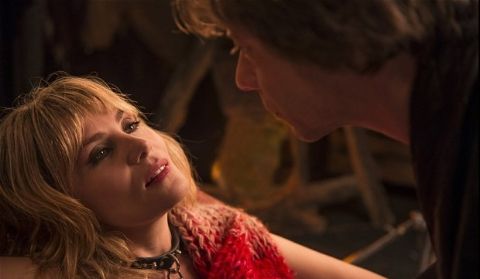
«For all its avowed danger and transgression there is something a little bit dated and even genteel in this theatregoers' adventure in sex. Yet Polanski brings to it a certain elegance and wit.»
Peter Bradshaw, The Guardian.
«This is a fun piece of play-acting for as long as it lasts, but it never quite feels like much more.»
Robbie Collin, Telegraph.
«A teasing dialectic of subjugation and power, female objectification and emasculating rebuke.»
David Rooney, The Hollywood Reporter.
. LA VIE D'ADELE - CHAPITRE 1 & 2, de Abdellatif Kechiche
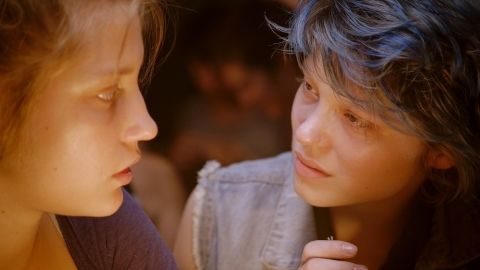
«A searingly intimate character study marked by the most explosively graphic lesbian sex scenes in recent memory.»
Justin Chang, Variety.
«It’s a passionate, poignantly handled love story which, despite an unhinged 3-hour running time, is held together by phenomenal turns from Lea Seydoux and newcomer Adele Exarchopoulos, in what is clearly a breakout performance.»
Jordan Mintzer, The Hollywood Reporter.
«Three-hour movies usually are the terrain of Westerns, period epics or sweeping, tragic romances. They don’t tend to be intimate character pieces, but LA VIE D'ADÈLE — CHAPITRE 1 & 2 more than justifies its length.»
Tim Grierson, Paste Magazine.
. LE PASSÉ, de Asghar Farhadi
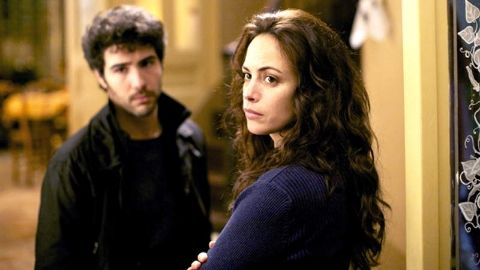
«Here it is further supercharged with a grand tragic theme — the past and its pitiless grip on us. Farhadi shows the desperation and anger involved in trying to defy the past, to annul incorrect life-choices.»
Peter Bradshaw, The Guardian.
«An exquisitely sculpted family melodrama in which the end of a marriage is merely the beginning of something else, an indelible tapestry of carefully engineered revelations and deeper human truths.»
Justin Chang, Variety.
«While failing to quite live up to the heart-wrenching moral dilemmas of the director’s previous film, LE PASSÉ offers up plenty of provocative notions about the state of the contemporary family unit, wrapped around a thoroughly engrossing central mystery.»
Shaun Munro, Film School Rejects.
. MICHAEL KOHLHAAS, de Arnaud Des Pallières
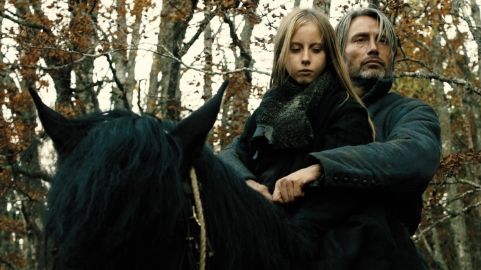
«Here is a handsomely-made and admirably high-minded revenge movie, set in 16th century France, that paints its world in glowing, vivid colours, but is rather too much in love with its leading man, Mads Mikkelsen, to achieve the epic grandeur it is aiming at.»
Andrew Pulver, The Guardian.
«The loss of narrative cohesion, however, has less to do with locale than with conception and editing, since the helmer is at a loss to coax out the many subthemes, such as the Protestant-Catholic divide, that give the book such understated richness.»
Jay Weissberg, Variety.
«An old-fashioned, Robin Hood-style revenge tale that favors self-serious storytelling over action and suspense, Arnaud des Pallieres' MICHAEL KOHLHAAS provides a few quick thrills and some beautifully photographed landscapes, but never really convinces as an intellectual’s swords-and-horses period piece.»
Jordan Mintzer, The Hollywood Reporter.
. NEBRASKA, de Alexander Payne
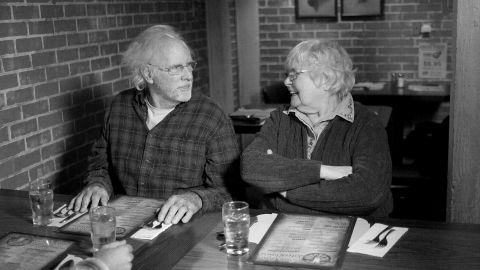
«It is shot, with almost Amish austerity in monochrome, which gives a wintry, end-of-the-world drear to that homely roadside Americana that Payne loves to pick out with his camera.»
Peter Bradshaw, The Guardian.
«Throughout, Payne gently infuses the film's comic tone with strains of longing and regret, always careful to avoid the maudlin or cheaply sentimental.»
Scott Foundas, Variety.
«The story is set in a world that still, both in the cinematic and collective memory, exists in black-and-white. It's stuck, like the leading characters, with decisions made decades ago and that is still defined by the past and a diminishing number of survivors.»
Todd McCarthy, The Hollywood Reporter.
. ONLY GOD FORGIVES, de Nicolas Winding Refn
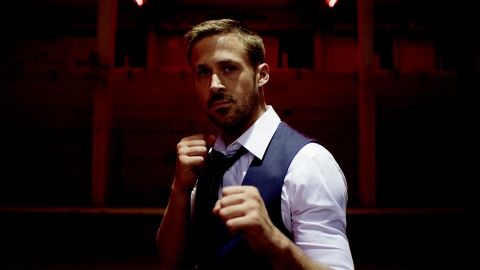
«Every scene, every frame, is executed with pure formal brilliance. I'm afraid it's going to be even nastier the next time I watch it.»
Peter Bradshaw, The Guardian.
«There’s enough here to fuel a lifetime of therapy sessions, as Refn extends his recent tendency of using cinema to wrestle his demons onscreen. The trouble is, he’s in such expert command of technique [...] that few will see beyond the surface.»
Peter Debruge, Variety.
«While ONLY GOD FORGIVES could be accused of shallowness and lack of psychological complexity, for the target audience, it will be wicked cool entertainment.»
David Rooney, The Hollywood Reporter.
. ONLY LOVERS LEFT ALIVE, de Jim Jarmusch
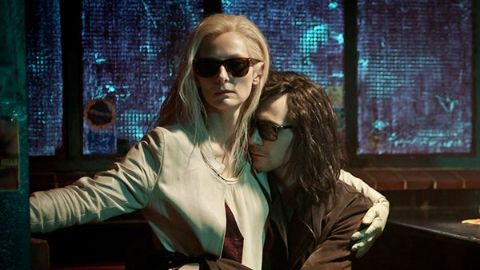
«An indulgent, eccentric midnight movie with a great deal of muso musing about vinyl and guitars and cool retro stuff.»
Peter Bradshaw, The Guardian.
«Tilda Swinton and Tom Hiddleston have empathic chemistry as the leads, and the pic is a smidge more commercial than Jarmusch’s meandering previous effort, THE LIMITS OF CONTROL. But it still feels like an in-joke intended only for select acolytes, who will probably love it with an undying passion.»
Leslie Felperin, Variety.
«The real pleasure of the film is in its languid droll cool and its romantic portrayal of the central couple, who are now our number one role models in the inevitable event of us turning vampiric.»
Jessica Kiang, IndieWire.
. SOSHITE CHICHI NI NARU / LIKE FATHER, LIKE SON, de Hirokazu Kore-Eda
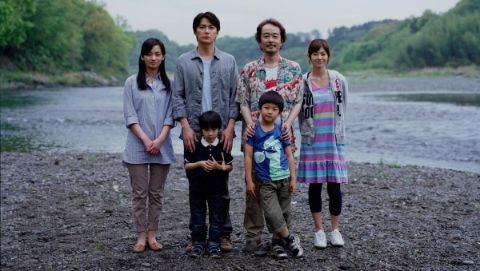
«A sweet-natured, but essentially undemanding film from Kore-eda.»
Peter Bradshaw, The Guardian.
«Evoking naturalistic performances from everyone involved (the kids are a pure delight), and with a welcome dose of humor, along with the requisite humanity he's known for, Kore-Eda Hirokazu's film is a touchingly low key, a wholly charming study of the evolution of parenthood.»
Kevin Jagernauth, IndieWire.
«Certainly interested in the nature-versus-nurture debate that's always waging in the study of childrearing, but at its core the movie seems more invested in exploring how we foolishly project our own values and needs onto our children, wanting them to justify our existence and legitimize our worldview.»
Tim Grierson, Paste Magazine.
. THE IMMIGRANT, de James Gray

«THE IMMIGRANT is certainly different: but Gray seems to run out of ideas and the film is shapeless and unsatisfying.»
Peter Bradshaw, The Guardian.
«Gray clearly sees something in Cotillard that no other helmer — not even her husband, Guillaume Canet — has brought out in her before. Recognizing the deep, haunted quality of Cotillard's gaze, he features her eyes as the soul of his story.»
Peter Debruge, Variety.
«Enhanced by a splendidly atmospheric recreation of the Lower East Side, the intimately focused work is anchored by another superior performance by Marion Cotillard.»
Todd McCarthy, The Hollywood Reporter.
. TIAN ZHU DING / A TOUCH OF SIN, de Jia Zhangke

«Tonal inconsistency, lethargic pacing and a shortage of fresh insight dilute the storytelling efficacy of this quartet of loosely interconnected episodes involving ordinary people pushed over the edge.»
David Rooney, The Hollywood Reporter.
«If the inscrutability of the main protagonists starts off as an intriguing challenge, by the end of the film's 2 1/4 hour run time, it has become a frustrating effort, that yields little reward.»
Jessica Kiang, IndieWire.
«A TOUCH OF SIN is remarkable in that Jia rather sardonically points out that, more often than not, his characters' lives are improved (albeit briefly) by the violence they embrace. It's a stunning commentary on why our collective belief in might makes right continues to prevail: Violence gets results in ways that more peaceful behavior doesn't.»
Tim Grierson, Paste Magazine.
. UN CHATEAU EN ITALIE, de Valeria Bruni-Tedeschi
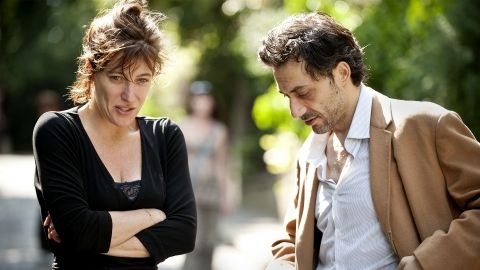
«A strained jeu d'ésprit which is smug, precious, carelessly constructed, emotionally negligible, and above all fantastically annoying. It's a terrible waste of real acting talent, including that of Bruni-Tesdeschi.»
Peter Bradshaw, The Guardian.
«Bruni Tedeschi holds all of pic's myriad tangents in a delicate balance, no single one ever rising to the fore, no pressure felt to wrap everything — or anything — up in a tidy package at the end.»
Scott Foundas, Variety.
«Pretty enough, though lacking any real visual distinction, the film has minimal narrative momentum. It's also surprisingly unemotional considering the sorrows endured by its characters and the close parallels with the director's own life.»
David Rooney, The Hollywood Reporter.
. WARA NO TATE / SHIELD OF STRAW, de Takashi Miike
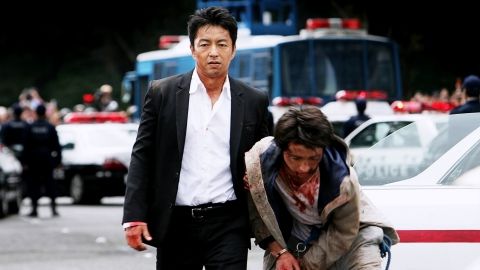
«It is put together with technical competence, but is entirely cliched and preposterous, and it implodes into its own fundamental narrative implausibility.»
Peter Bradshaw, The Guardian.
«Even the hackiest of Hollywood writers would have known how to fix its considerable script problems.»
Peter Debruge, Variety.
«The movie has its pulpy thrills — not to mention a gripping central performance from Takao Osawa — but plausibility issues and an unconvincing exploration of the limits of justice noticeably dampen the fun.»
Tim Grierson, Screen Daily.